A Telegram channel needs consistency: ideas, posts, covers, short videos, repurposed content, and clear positioning. The difficult part is often not knowledge, but production speed. AI helps turn rough ideas into publishable drafts faster.
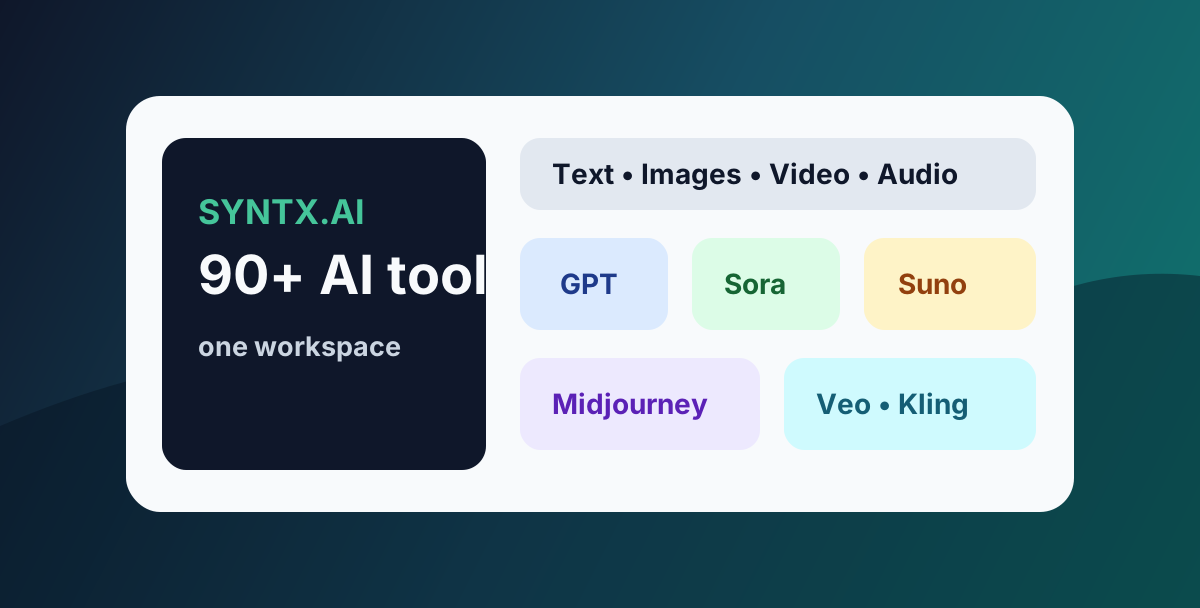
AiHere can be used as a single workspace for this workflow: draft a post, generate an image, animate a cover, and prepare headline variations without jumping between many separate tools.
What AI Can Help With
AI is strongest when the task is repeatable: generate topic ideas, turn notes into a post, create headline options, summarize a long article, build a checklist, or prepare a visual concept.
That does not mean AI should replace the author. The best result comes when AI creates the first version and the human editor adds context, examples, facts, and a recognizable voice.
Building a Content Plan
A useful content plan should be built around reader problems, not random ideas. For Telegram, strong formats include:
- short explanations;
- mistake lists;
- step-by-step guides;
- tool comparisons;
- checklists;
- personal testing notes;
- prompt collections.
Prompt example:
Act as an editor for a Telegram channel about AI tools. Suggest 20 topics for one month: 8 educational posts, 5 practical tutorials, 4 tool comparisons, and 3 short prompt posts. For each topic, include a headline, reader benefit, and format.After that, choose the best ideas and ask AI to expand them into outlines. This keeps the channel structured instead of random.
Drafting Posts and Headlines
AI is useful for first drafts. Give it your notes, define the tone, and ask for a short post with a clear structure. Avoid vague requests such as “write something about AI.” Specific prompts produce better drafts.
Example:
Write a 1,800-character Telegram post about using AI to create article covers. Tone: practical and calm. Structure: problem, solution, three steps, common mistake, conclusion. Do not promise guaranteed results.Then edit the text manually. Remove generic phrases, check claims, and add your own example. That final pass is what makes the post feel credible.
Creating Covers
A cover helps a post stand out in the feed. For Telegram, simple compositions work best: one main object, clean background, clear metaphor, and enough empty space if text will be added later.
Prompt example:
Minimal editorial cover for a Telegram post about AI content planning, clean dark background, glowing calendar, subtle neural lines, green and blue accents, no text, modern tech style.Generate several variants, then keep a consistent visual direction for recurring rubrics.
Short AI Videos
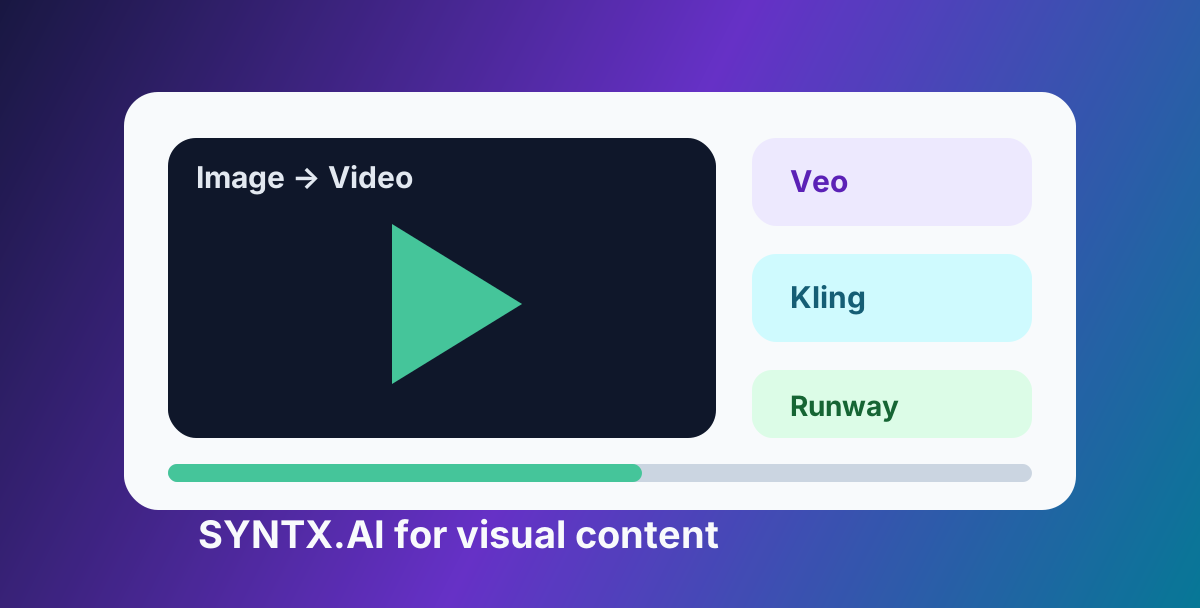
Short AI videos can be used as post openers, channel promos, or visual assets for ads. A practical workflow is to generate a static cover first and then animate it with an image-to-video model. This keeps the channel style more consistent.
The best short clips usually have one idea: a dashboard lighting up, a calendar filling with content ideas, or a cover gently moving. Too many actions in a few seconds create visual noise.
Quality Control
The main mistake is publishing AI output without editing. Readers notice generic phrasing quickly. A better process:
- AI suggests ideas.
- The author chooses the angle.
- AI creates an outline and draft.
- The author checks facts and rewrites weak parts.
- AI helps with covers and video assets.
This way AI speeds up production without erasing the channel’s personality.
Bottom Line
AI is useful for Telegram because it reduces routine work: ideas, outlines, drafts, covers, and short visual clips. The strongest channels will not be the ones that publish raw AI text, but the ones that combine AI speed with human editing and experience.
FAQ
Can AI fully run a Telegram channel?
AI can help with ideas, drafts, visuals, and repurposing, but a channel still needs human judgment, fact-checking, tone, and lived experience.
What should I generate first for Telegram?
Start with topic ideas, content plans, headlines, post outlines, covers, and short video concepts. These tasks save time quickly.
How do I avoid generic AI content?
Use AI for structure and options, then add your examples, opinions, data, and editing. The final voice should remain human.