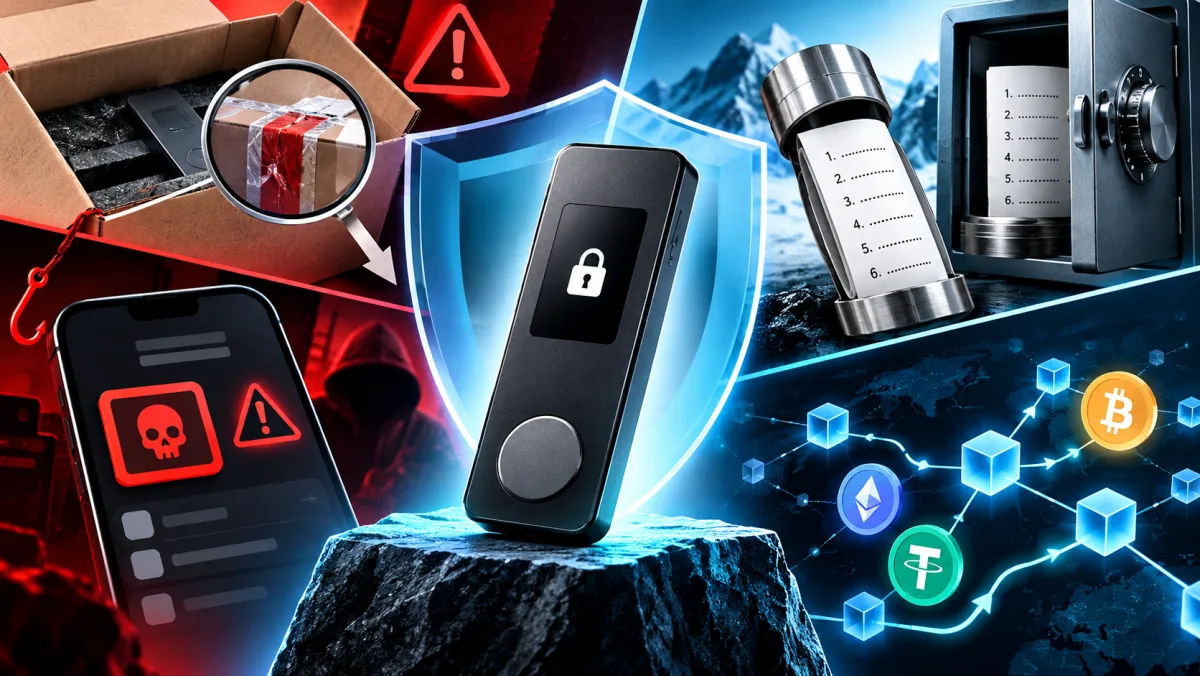
Seed phrases solved one problem and created another: self-custody became portable, but also brutally unforgiving. A photo in the wrong cloud folder, a phishing page, a lost notebook, a house move, one distracted evening — and the security model collapses.
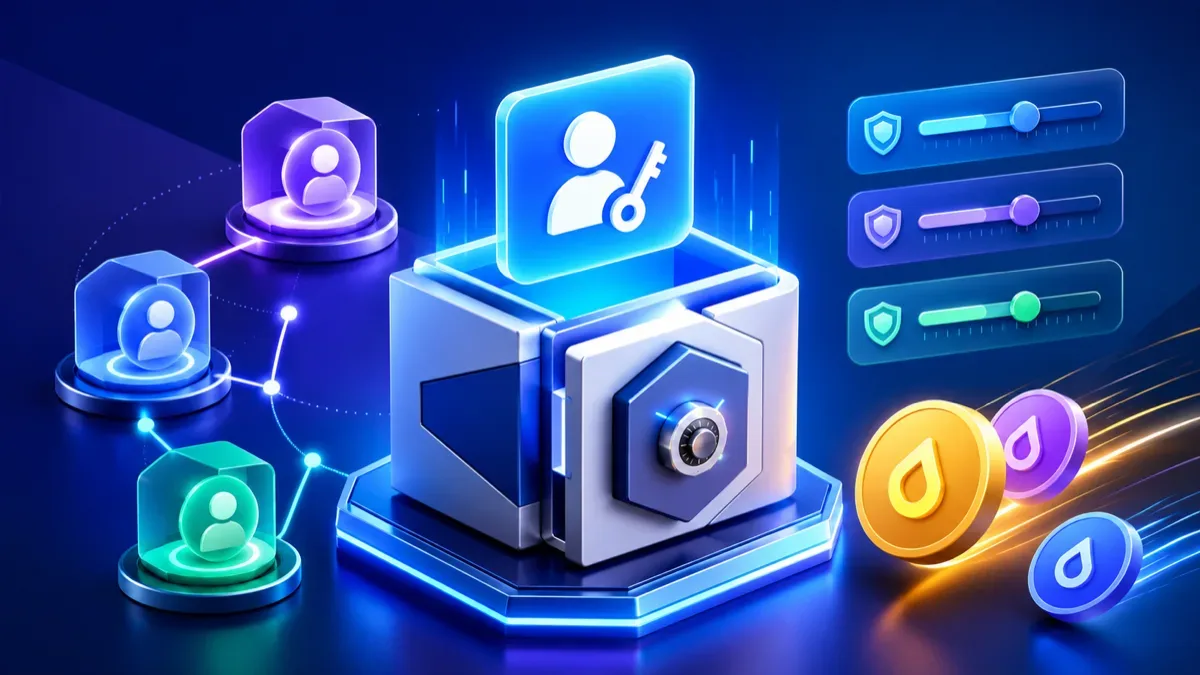
Account abstraction is the serious attempt to move crypto wallets away from that design. Instead of treating a wallet as one private key with a 12- or 24-word backup, it turns the account into programmable logic: passkeys, guardians, multisig approvals, daily limits, spending roles, session keys, batched transactions and gas paid in tokens can all become wallet features.
The short version: smart wallets are not automatically safer than seed phrases. They are safer when the recovery model, signer setup and app support match the way you actually use crypto.
What account abstraction actually changes
A traditional Ethereum wallet is usually an externally owned account, or EOA. It signs transactions with one private key. If that key is lost, there is no recovery. If that key is stolen, there is no built-in spending policy to slow the attacker down.
A smart account is a contract account controlled by rules. Those rules can say: accept a passkey signature, require two of three owners, allow a small USDC transfer without full approval, block suspicious calls, recover through guardians after a delay, or let a dapp sponsor gas.
ERC-4337 is the main standard that made this practical on Ethereum-style chains without changing Ethereum’s base protocol. Instead of a normal transaction sent directly by an EOA, the user signs a UserOperation. A bundler submits it through an EntryPoint contract, and an optional Paymaster can cover gas or accept another token for fees. That is the plumbing behind the smoother UX.
This matters because most crypto friction is not ideological. It is operational. New users do not want to buy ETH just to move USDC. Normal people do not want their life savings secured by a paper phrase. Teams do not want one founder’s laptop to be the treasury. Power users do not want to sign five transactions when one batched operation would do.
The comparison in one view
| Wallet or stack | Best for | Recovery model | Gas UX | Main tradeoff |
|---|---|---|---|---|
| Argent / Ready | Mobile-first consumer crypto, seedless recovery | Guardians for Argent mobile; Ready also emphasizes consumer banking-style UX | Depends on product, chain and app flow | Product naming and feature split matter: Argent mobile, Argent X and Ready are not identical |
| Safe | Serious balances, teams, DAOs, families, power users | Multisig owners, replaceable signers, guardian-style recovery options | Strong controls, batching, spending limits; not always the simplest consumer flow | More setup and more responsibility in signer design |
| Coinbase/Base Smart Wallet | Fast passkey onboarding for apps and Base/EVM users | Passkeys, with recovery flow that should be set up before losing access | Designed to remove app-install and seed-phrase friction | Recovery still depends on passkey hygiene and supported flows |
| Ambire | EVM power users who want batching and gas abstraction | Supports EOA, smart account and EIP-7702-style flows | Gas Tank and token-fee UX are the draw | More of a power-user wallet than a minimal beginner app |
| Biconomy | Developers building wallet UX inside apps | Infrastructure layer, not a consumer wallet | Paymasters, bundlers, sponsored gas, token gas, cross-chain abstraction | Users depend on how each app integrates it |
The mistake is asking which smart wallet is best in the abstract. The right question is: what failure are you most worried about?
If the fear is losing 12 words, choose a wallet with recovery you can test. If the fear is one compromised device draining a large balance, use multisig and spending limits. If the pain is onboarding users into an app, use passkeys and sponsored transactions. If the problem is long-term storage, a hardware wallet can still be part of the setup as a signer or guardian.
Ready / Argent: the clearest consumer answer to seed phrases
Argent helped popularize social recovery before account abstraction became a mainstream phrase. As of the latest official materials reviewed for this piece, Argent’s main consumer brand redirects to Ready, while Argent support still distinguishes between Argent mobile, Argent X and Argent web wallet.
That distinction matters. Argent mobile is described by Argent support as seedless and based on social recovery: users choose trusted people or devices called guardians, and a majority can authorize recovery if the phone is lost. Guardians can include trusted people, hardware wallets such as Ledger and Trezor, MetaMask and Argent itself. Argent also describes a 48-hour security period during which a recovery can be cancelled. Argent X, by contrast, uses a seed phrase as the primary recovery path.
Ready is positioning the same lineage closer to a crypto bank alternative: mobile app, cash deposit rails, card spending, swaps, staking and support. The site says Ready never has access to user assets, which is the key point: this is meant to remain self-custodial, not become a custodial fintech account with crypto branding.
Use it if you want crypto that feels closer to a mobile money app than a developer tool. The strongest fit is a user who wants to hold and spend stablecoins or mainstream crypto without managing raw private-key backups.
Do not use it as a lazy substitute for a security plan. You still need to understand which product you are using, which chain it supports, who or what your guardians are, and what happens if your phone, email, passkey provider or guardian set fails at the same time.
Safe: the serious default for assets you cannot casually lose
Safe is not the fastest path for a first-time user who just wants to try one dapp. It is the wallet you choose when single-key custody is the wrong shape for the risk.
Safe’s core model is multisig: instead of one key having full control, an account can require M-of-N approvals. For a personal setup, that might mean two of three signers: one hardware wallet at home, one mobile signer, one recovery signer stored separately. For a company or DAO, it might mean several operators with defined thresholds.
The important part is not the word multisig; it is removing the single point of failure. Safe also supports transaction simulation, transaction building, spending limits, roles, multichain treasury management and modules. Safe’s own site claims more than $1 trillion in processed volume, 57 million wallets deployed and more than $60 billion secured; treat those as company-reported metrics, but they explain why Safe has become the default reference point for onchain treasuries.

Spending limits are especially practical. Safe’s help docs describe a module that lets a beneficiary address spend a specified token up to a one-time or periodic limit without requiring the full signer threshold each time. That is exactly the kind of feature seed-phrase wallets do not natively have: routine activity can be convenient while large movements stay protected.
Use Safe for treasuries, shared funds, family setups, founder wallets, protocol admin keys, NFT vaults and serious DeFi positions. It is also a good personal wallet if you are willing to design the signer setup carefully.
Do not use it if you want a one-minute beginner flow and have no patience for operational security. A bad multisig setup can still fail. Three signers stored in the same laptop bag are not three meaningful signers. A threshold nobody can meet during an emergency is not resilience.
Coinbase/Base Smart Wallet: passkeys make onboarding feel normal
Coinbase Smart Wallet, now closely tied to the Base wallet experience in Coinbase’s help materials, represents the passkey route: users can sign in with passkeys instead of memorizing a recovery phrase. Cloud-backed passkeys through Apple, Google or a password manager can make wallet access feel much closer to modern app login.
That is a huge UX improvement, especially for apps that do not want users to install a browser extension before doing anything. But it does not make recovery irrelevant. Coinbase’s own help explains that users can set up a recovery phrase for the smart wallet to recover from passkey loss, and that signer changes are onchain actions that may require network fees. The practical lesson is simple: set up recovery while you still have access. Do not wait until the passkey is gone.
Use this model for low-friction onboarding, consumer apps, Base-heavy usage and users who already trust passkey managers. Be more cautious for high-value cold storage, unsupported chains, or dapps that still expect old EOA behavior.
Ambire: smart-wallet ergonomics for EVM power users
Ambire is worth watching because it sits between consumer wallet and power-user control panel. Its help docs describe support for EOA accounts, smart accounts, EIP-7702-style SmarterEOA flows, transaction batching, human-readable transactions and a Gas Tank that exists because of gas abstraction.
That makes Ambire interesting for users who understand EVM networks and want better transaction ergonomics without moving everything into a team-style Safe. The Gas Tank idea is simple: pre-fund fee handling so every transaction does not become a scramble for the right native token on the right chain.
The tradeoff is complexity. Ambire can be more capable than a simple mobile wallet, but that also means users need to understand which account type they are operating and how recovery works for that account.
Biconomy: not your wallet, but the layer that makes apps feel walletless
Biconomy is different from the others because it is infrastructure. Most users will not choose it the way they choose Safe or Ready. They will experience it when a dapp uses Biconomy to sponsor gas, accept token fees, batch actions or coordinate cross-chain execution.
Biconomy’s docs describe its Modular Execution Environment as implementing ERC-4337 bundler and paymaster functionality with additional cross-chain orchestration. Its Paymaster documentation covers sponsored gas and token-pay gas models, including stablecoin-style fee payment.
For builders, this is where account abstraction becomes product design. A game can sponsor early user actions. A DeFi app can let users pay fees in USDC. A consumer app can hide chain plumbing until the user actually needs to understand it.
For users, the caveat is that gasless does not mean costless. Someone pays. Sometimes it is the app, sometimes it is a token Paymaster, sometimes a policy engine rejects the transaction. The UX can feel Web2-like, but the trust and failure model is still crypto infrastructure.
The hidden tradeoffs: smart wallets are better, not magical
Account abstraction removes many old annoyances, but it introduces new surfaces to inspect.
First, smart accounts are code. That means audits, upgradeability, modules, signer permissions and storage layout matter. A mature wallet with battle-tested contracts is preferable to a shiny wallet with vague security claims.
Second, recovery is a policy, not a miracle. Social recovery protects against losing one device; it does not protect against choosing careless guardians, losing access to every recovery channel, or approving a malicious recovery request. Passkeys are excellent UX, but device sync, cloud accounts, password managers and hardware security keys all have different recovery assumptions.
Third, dapp compatibility is still uneven. Many apps now understand smart wallets and EIP-1271 signatures, but not all of crypto was designed around contract accounts. You can still hit flows that assume a classic EOA.
Fourth, gas abstraction depends on infrastructure. Paymasters, bundlers and relayers can improve UX, but availability, sponsorship rules, supported chains and rate limits are app-specific. A wallet that feels gasless in one app may feel very normal in another.
Fifth, fees still exist. Deploying a smart account, changing signers, recovering an account, executing modules or using Ethereum mainnet can cost money. Account abstraction can reduce friction; it does not repeal blockspace economics.
How to choose
Choose Ready / Argent if you want the most consumer-friendly path away from seed phrases and you are comfortable with a mobile-first wallet. Confirm which product you are using: Argent mobile, Argent X and Ready do not have identical recovery models.
Choose Safe if the assets matter enough to justify setup time. For most serious crypto users, the best answer is not one hot wallet; it is a Safe with a sensible threshold, hardware-wallet signers, a recovery plan and limited daily spending permissions.
Choose Coinbase/Base Smart Wallet if you want passkey onboarding and mostly live inside apps that support it well. It is a strong UX pattern for mainstream adoption, but you should configure recovery before there is an emergency.
Choose Ambire if you are an EVM user who wants batching, gas abstraction and more control than a simple mobile wallet gives you.
Choose Biconomy if you are building an app and want users to stop thinking about gas, bridges and network setup on every click.
For long-term storage, do not frame this as smart wallet versus hardware wallet. The better design is often smart wallet plus hardware wallet: the smart account provides rules, recovery and limits; the hardware wallet acts as a high-assurance signer or guardian.
Bottom line
The endgame is not a wallet with no security burden. That product should not exist. The endgame is a wallet where the security burden matches human behavior.
Seed phrases ask users to become perfect secret managers. Smart wallets let users design failure-tolerant accounts: a lost phone is recoverable, a compromised signer is removable, small payments are convenient, large transfers require more friction, and gas can be abstracted away when the app is willing to pay for the UX.
For everyday crypto, Ready / Argent and Coinbase-style passkey wallets make the first mile much better. For meaningful balances, Safe remains the more defensible default. For apps, Biconomy and similar infrastructure are how account abstraction becomes invisible.
The practical recommendation: start small, test recovery before funding heavily, separate daily spending from long-term storage, and never assume no seed phrase means no responsibility.