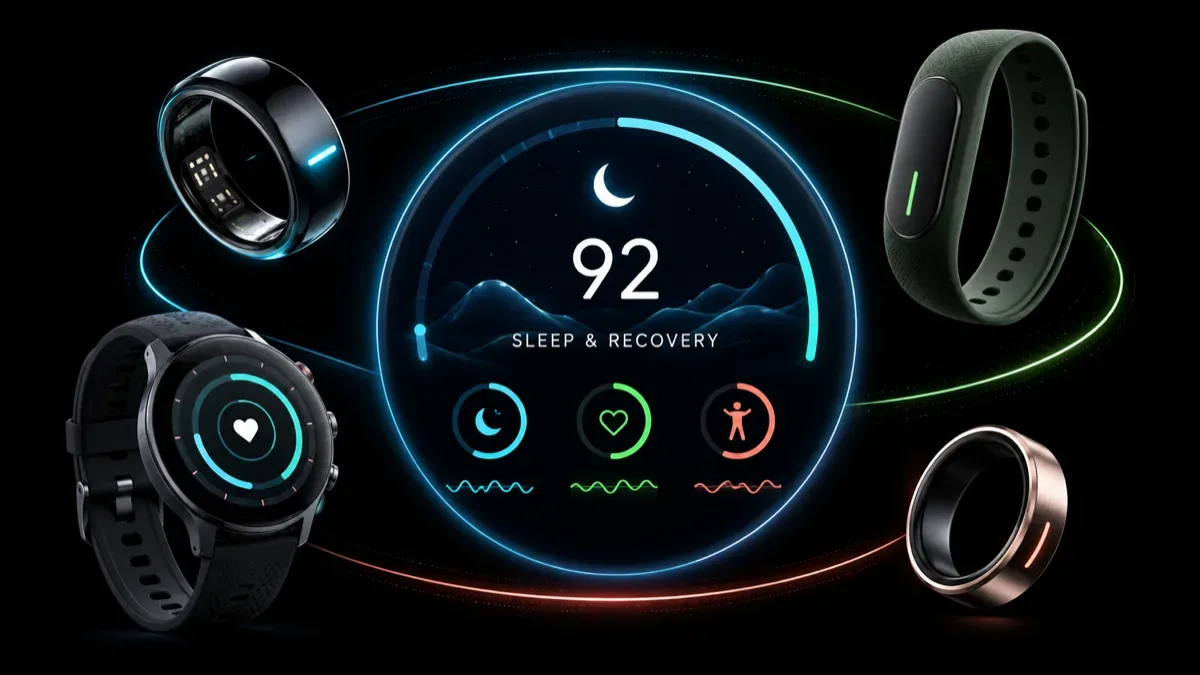
If you start choosing a wearable for sleep and recovery, one awkward truth appears fast: the metrics look similar, but life with each device is different. One needs a subscription, another is annoying at night, a third is excellent for training but turns sleep into another chart without an obvious decision.
As of May 23, 2026, the best way to choose between Oura Ring, WHOOP, Garmin and Ultrahuman is not to start with who is more accurate. Start with what you will actually wear every day. For sleep and HRV, consistency beats a one-off accuracy claim: a tracker sitting on a charger, or irritating your wrist in bed, has already lost.
Quick choice
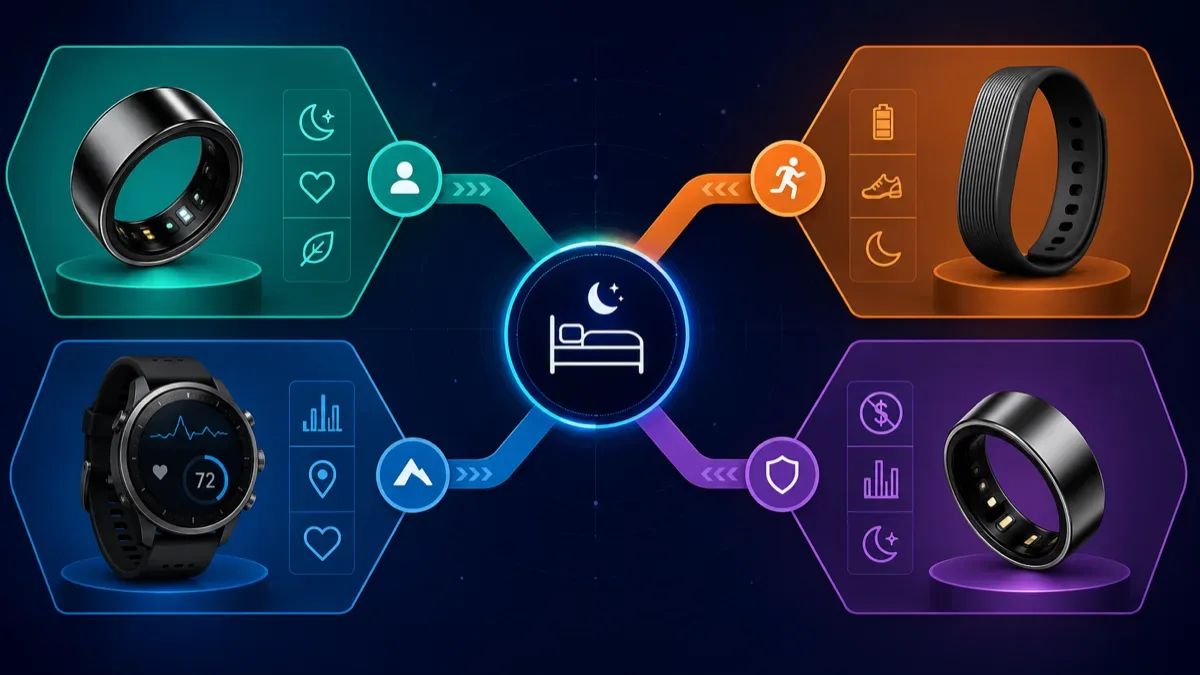
If you want the calmest sleep tracker in a ring format, look at Oura. It is the strongest ecosystem here for sleep, readiness, stress, women’s health and long-term trends, but it is built around membership: without Oura Membership, the app experience is meaningfully limited.
If you train regularly and want recovery tied to load, habits and coaching, WHOOP is the more natural fit. Its strengths are a screenless design, long battery life and a tight focus on Recovery, Strain and Sleep. The tradeoff is that you are not really buying a gadget. You are joining an annual membership.
If sport matters more than a polished wellness dashboard, choose Garmin. For running, cycling, strength work, hiking, GPS, heart rate zones, training readiness and activity export, Garmin watches are more practical than rings. The catch: you have to sleep with a watch, and comfort depends heavily on the model and size.
If you want a ring without a mandatory fee for access to your data, Ultrahuman Ring AIR is the clearest candidate. It is built for sleep, recovery, temperature, HRV and gentle nudges, but before buying you should separately check data export, regional features and the maturity of the integrations you need.
Comparison in one table
| Device | Best use case | Subscription and cost of ownership | Battery | Main compromise |
|---|---|---|---|---|
| Oura Ring | Sleep, HRV, readiness, stress, women’s health | Membership: $5.99/month or $69.99/year for U.S. members; prices vary by region | Usually 5-8 days on Oura Ring 4 | The best insights are tied to membership |
| WHOOP | Recovery + strain + habits + screenless training | U.S. plans in the research set are listed from $199, $239 and $359/year for WHOOP One, Peak and Life; device is included in membership | 14+ days on WHOOP 5.0/MG | Without membership there is effectively no product; no screen or classic smartwatch features |
| Garmin | Sport, GPS, training readiness, HRV Status, Body Battery | Hardware is purchased separately; core wellness and sport metrics do not require an Oura/WHOOP-style wellness subscription | Strongly model-dependent; Venu 4 is rated up to 12 days in smartwatch mode | Watches can be less comfortable for sleep than a ring or strap |
| Ultrahuman | Ring for sleep and recovery without mandatory subscription | Ring AIR is listed from $349; access to ring data has no recurring subscription fee | 4-6 days | Less public clarity on API/export and less sport depth than Garmin or WHOOP |
Sleep and HRV: where rings are stronger, and watches are not always worse
For night tracking, a ring usually wins in everyday life: it is lighter, has no glowing screen, does not catch on sleeves and is easier to forget. That makes Oura and Ultrahuman natural candidates if your main goal is to understand sleep, HRV, night heart rate, temperature and recovery.
Oura Ring 4 measures night heart rate, HRV, breathing, SpO2, temperature and movement. Active membership unlocks detailed sleep analysis, Readiness, Daytime Stress, Resilience, Cardiovascular Age, VO2 Max estimate, reports and Oura Labs. One important detail: Oura Labs is experimental. For example, the Blood Pressure Profile Study is available only in English for U.S.-based members, does not provide blood pressure measurements and is not a diagnostic feature.
Ultrahuman Ring AIR plays in a similar category, but its pitch is different: no required subscription. The product page lists Sleep Score, sleep stages, Dynamic Recovery, skin temperature, continuous HRV monitoring, stress rhythm and caffeine window. For someone who wants a ring and data without a monthly bill, that is a strong argument. But if you are building your own quantified-self pipeline, check how you will actually get data out of Ultrahuman before you buy. In open official material, it is easier to find the promise of data access without subscription than a complete public export or API document.
WHOOP is also strong for sleep, but its logic is different. It is less a night-only ring and more a continuous recovery coach. Sleep, Recovery and Strain are connected with training, the habit journal, stress and an AI layer. That is useful if you are willing to tell the system what you drank, how you trained, whether you traveled, got sick or took supplements.
Garmin should not be dismissed. HRV Status is built from overnight readings and needs roughly three weeks of regular sleep wearing the watch to establish a personal baseline. Body Battery uses HRV, stress and activity to estimate your energy reserve through the day. If you already wear Garmin around the clock, a separate ring may be redundant. If the watch bothers you at night, the data will have holes.
Sport and recovery: Garmin and WHOOP play a different game
Rings are comfortable for sleep, but sport is a harder environment. Barbells, kettlebells, pull-up bars, climbing, contact sports and even a tight bike grip expose the weakness of the form factor: the ring either gets in the way or you want to take it off. If you remove it for training, the recovery story after load becomes less connected.
Garmin is the most practical choice here. Even a wellness-oriented model like Venu 4 includes HRV Status, Body Battery, recovery time, training readiness, wrist-based running dynamics, women’s health tracking, Garmin Fitness Coach and up to 12 days of battery life in smartwatch mode. Dedicated sport lines such as Forerunner, fenix, epix, Instinct and Enduro go further: GPS, pace, power, routes, sensors, workouts, racing and long activities.
WHOOP is strong if you do not need a screen or wrist GPS, but you do want recovery discipline. Strain shows how heavy the day was, Recovery suggests whether to push or hold back, and the habit journal connects behavior to results. For strength work and team sports, a strap is easier to keep on than a ring. But for pace, maps, navigation and glanceable workout prompts, WHOOP does not replace Garmin.
Oura and Ultrahuman can work as a night layer next to sport watches. Example: Garmin for workouts, a ring for sleep. It costs more, but it removes the conflict between the best form factor for sport and the best form factor for sleep.
Stress, health and longevity: do not confuse guidance with diagnosis
All four products sell a similar promise: you can see HRV, sleep, heart rate, temperature and stress, then finally understand what is happening in your body. In practice, a wearable is useful less as a mini-doctor and more as a trend sensor. It can help you notice that alcohol, late meals, flights, illness or overreaching tank your recovery. It should not make medical decisions for you.
Oura is strong at soft interpretation: Readiness, Resilience, Daytime Stress, Cumulative Stress, Cardiovascular Age and Cardio Capacity make data easier to understand if you do not want to live in CSV files. WHOOP is moving toward a health platform: in 2026 the company announced on-demand clinician access in the U.S. for summer, EHR syncing, and new AI features called My Memory and Proactive Check-ins. That is interesting, but it is not the main reason to buy WHOOP outside the U.S. or if you do not want a wearable to hold more medical context.
Garmin uses a more athletic language: HRV Status, Body Battery, stress level, sleep, recovery time and training readiness. It feels less like a wellness journal and more like a dashboard for an active person. Ultrahuman focuses on nudges around sleep, recovery, temperature, stress, circadian rhythm and caffeine timing.
Regulated features need a separate warning. ECG, irregular rhythm notifications, blood pressure insights, AFib detection and similar functions almost always depend on country, model, user age, app version and regulatory status. WHOOP Life/MG, Garmin ECG App, Oura Labs and Ultrahuman PowerPlugs should not be compared as universal features for everyone. Before buying, check the exact country and exact model.
Women’s health: temperature helps, but it is not contraception by default
For cycle tracking, rings look stronger than watches because of night temperature and comfortable continuous wear. Oura offers Cycle Insights, Pregnancy Insights and integrations with apps such as Natural Cycles, Flo and Clue. That makes Oura the most mature option if you want temperature, sleep and women’s health in one app.
Garmin is also developing women’s health features: Venu 4 lists skin temperature for past ovulation estimates and improved period predictions. But Garmin explicitly says menstrual cycle tracking should not be used to support conception, contraception or birth control. That boundary matters: cycle predictions can help you observe patterns, but they are not a medical method.
WHOOP includes Women’s Hormonal Insights in its membership lineup. Ultrahuman lists temperature-based ovulation prediction. In both cases, the key questions are the same: availability in your country, clarity of the method, data export and how much you trust the app in a sensitive category.
Subscription, data and export: the hidden wearable cost
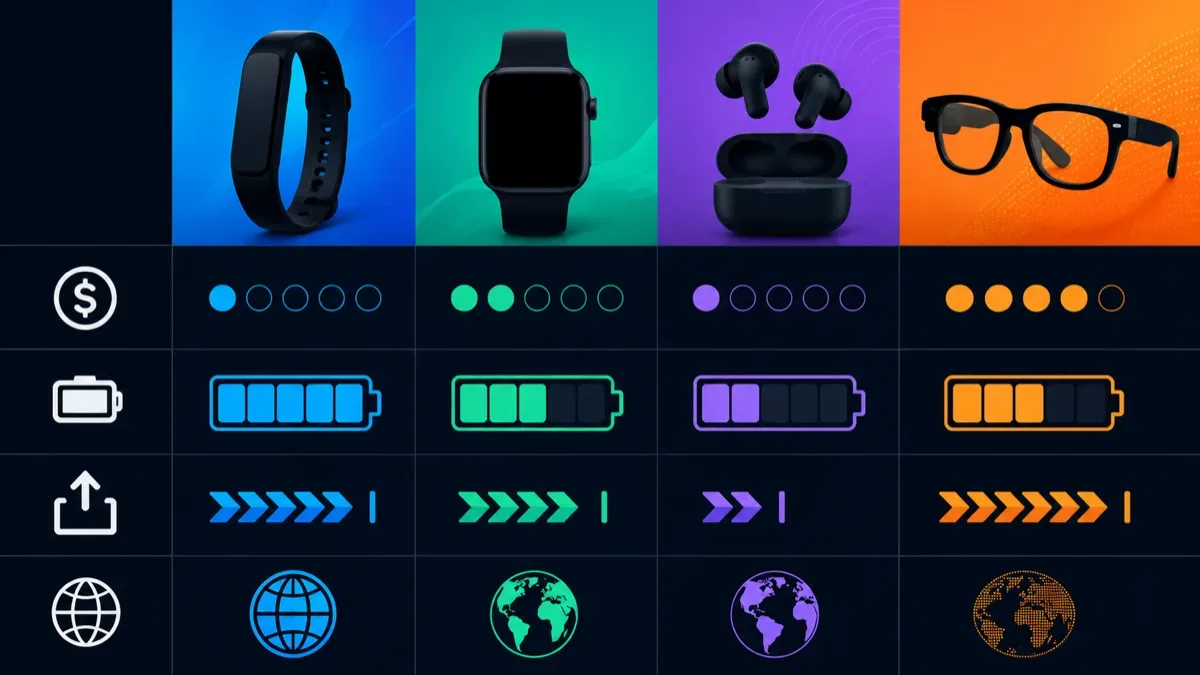
Buying a wearable is not only about the device price. After two years, the difference between buy it and wear it and pay to keep the insights becomes hard to ignore.
Oura: U.S. membership costs $5.99/month or $69.99/year. Over two years, that is about $140 with annual billing, on top of the ring price. Oura has an API V2, but for Gen3 and Ring 4 users, API access requires active Oura Membership. Data files can still be downloaded through Membership Hub, at least through a GDPR-compliant request path.
WHOOP: the model is fully subscription-based. In the U.S. storefront from the research set, WHOOP One, Peak and Life are listed from $199, $239 and $359/year, and the device is included in membership. WHOOP supports CSV data export and has a developer API, but continuous heart rate data is not available through the API. For WHOOP MG, some health data may be subject to separate retention rules.
Garmin: strongest for sport export. Garmin Connect can export activities in formats such as GPX, TCX, original/FIT and CSV, and users can request all-account data export through Garmin’s account tools. If you move workouts into Strava, TrainingPeaks, GoldenCheetah or your own spreadsheets, this may matter more than a beautiful sleep score.
Ultrahuman: the main advantage is no recurring subscription fee for Ring AIR data. The main question is data openness. If the app is enough for you, that may be fine. If you want to routinely extract raw or semi-structured data, do not buy blind: first check current export settings, API access and integrations.
Who Oura Ring is for
Oura is worth choosing if you want the most polished smart ring for sleep, recovery, HRV, readiness, stress and women’s health. It fits people who do not want to sleep with a sport watch, value clear reports and are comfortable paying for the app.
It is not the best fit if you are strongly against subscriptions, train heavily with barbells or want one device for GPS, pace, maps and workout screens. Oura is not a sport watch. It is a ring for sleep, recovery and long-term trends.
Who WHOOP is for
WHOOP fits people who think in systems: load, recovery, sleep, habits, stress, journal, coaching. It is especially logical if you train 3-6 times a week, do not want a screen on your wrist and are comfortable with annual billing.
It does not fit people who want to buy a device once, see notifications, use maps, play music, get quick workout screens or avoid a subscription model. WHOOP without membership is not a standalone gadget.
Who Garmin is for
Garmin is the choice for sport, data and autonomy. If you run, cycle, hike, prepare for races or want to connect sleep with training readiness, Garmin will usually give you more practical value for the money.
It is not ideal if you cannot sleep comfortably with a watch or want the most invisible tracker possible. Large sport models can be excellent by day and annoying at night. This is one of those cases where trying the device matters more than reading the spec sheet.
Who Ultrahuman Ring AIR is for
Ultrahuman Ring AIR is worth considering if you want a smart ring for sleep, recovery and temperature without a required monthly fee. It is especially interesting if you do not want HRV to become another subscription.
It is not the best choice if mature integrations, transparent API access, Garmin-level sport analytics or medical features with clear regional availability are critical to you. The potential is high, but check your exact use cases before buying.
Bottom line: choose the habit, not the metric
If you want one short answer: for sleep and soft longevity tracking, choose Oura if the subscription does not bother you. For training-led recovery, choose Garmin. For screenless recovery coaching, choose WHOOP. For a ring without a mandatory subscription, choose Ultrahuman.
But the best wearable is the one you do not take off. HRV, sleep score and readiness become useful only after weeks and months of continuous data. The final test is simple: can you sleep with it, charge it without irritation, pay for it without regret and change your behavior based on its prompts? If not, even the most accurate sensor becomes an expensive accessory.